

About four years ago, Gracie and Ashlee joined us to share their experiences growing up with dyslexia. At the time, they were both in high school. Now, they’re college students navigating new academic expectations, greater independence, and the responsibility of deciding when and how to ask for support. In this episode, we bring their separate…

What makes a skilled reader? Dr. Hollis Scarborough, a psychologist and literacy expert, created the idea of the “Reading Rope” to visually represent each component of skilled reading as a strand of thread that is woven together with other threads to create a “rope” that is skilled reading. The components are divided into two main…
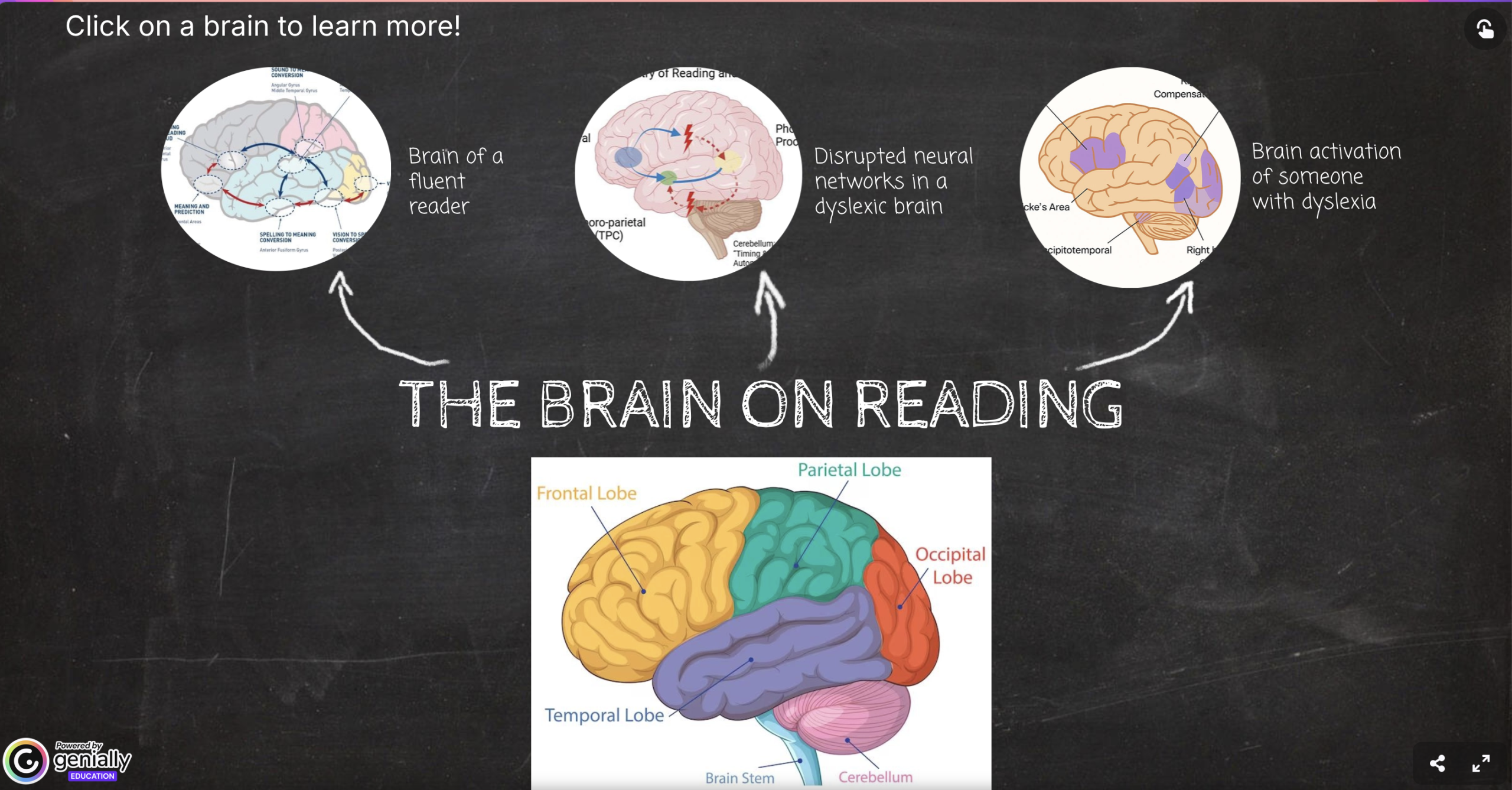
Reading may feel automatic to a skilled reader, but it is actually a complex process that requires several areas of the brain to work together. The brain must recognize printed letters and words, connect letters with sounds, access language and vocabulary, and construct meaning from the text. For individuals with dyslexia, these reading networks may…

Episode Summary In this powerful episode, we’re unpacking what Speech-Language Pathologists really know, and wish they knew, about dyslexia. After interviewing dozens of SLPs and graduate students at the 2024 ASHA Convention, we discovered clear themes: misinformation, missing training, personal stories of struggle and resilience, and a deep desire for better tools to support dyslexic…

As parents, we always want our children to succeed and thrive in every aspect of their life. However, sometimes our children may face challenges that hinder their academic progress. In such a scenario, we must take the necessary steps to help them overcome these challenges. One critical step is having them evaluated for dyslexia or…

Phonemic Awareness (PA) is a foundational skill that is critical for learning to read. In English (phonemes, which are tiny speech sounds) are mapped onto letters that we use for reading and spelling. Reading involves mapping a spatial sequence of letters, from left to right, onto a temporal sequence of phonemes, organized from first to…

Dyslexia looks different at different ages. The only way you will know for sure is by having your child tested. Here are some red flags from preschool to early elementary age. Preschool Delayed speech Mixing up sounds in multisyllabic words Early stuttering Ear infections Difficulty rhyming. Kindergarten Struggles to read familiar words Doesn’t know how…
Sight words are written words that can not be decoded (sounded out) and must be memorized. Examples of these words are “the”, “and”, “you”, “said”, and “two”. To help your child memorize sight words, put magnets of the sight words on the refrigerator, have your child practice them with chalk on the driveway or sidewalk,…
When we introduce the concept of phonemic awareness to parents they often ask, “well isn’t that the same as phonics?” to which we say, to their surprise, no! Phonemic Awareness and Phonics are two separate, but key factors in learning to read. And what, might you ask, is the difference between them? What is Phonics?…
* Video description below is from OUR DYSLEXIC CHILDREN YouTube channel. “ABOUT THE FILM OUR DYSLEXIC CHILDREN began principal photography in 2018. The community-funded, non-profit documentary film runs 44 minutes. In 2010, a group of parents in a suburban school district near Columbus, Ohio discovered their children had something in common – they could not…